

Last Updated on 26/01/2026 by admin
Tennis Elbow Causes, Treatment & Recovery
Tennis elbow is a common overuse injury that causes pain around the outer elbow. It affects not only sports participants but also people who perform repetitive arm or wrist movements. This article explores its causes, treatment options, and ways to support recovery through bracing and exercise.
An Overview of the Condition
Tennis elbow, medically known as lateral epicondylitis, is a common overuse injury involving inflammation or micro tearing of the tendons that attach to the lateral epicondyle of the humerus—the bony prominence on the outside of the elbow. It is primarily caused by repetitive wrist extension or forearm rotation, leading to strain on the extensor carpi radialis brevis (ECRB) tendon. Despite the name, tennis elbow is not limited to sports participants; it frequently affects individuals in occupations or activities involving repetitive arm movements.
Symptoms of Tennis Elbow
- Pain and tenderness: Pain is usually located on the outer part of the elbow and may radiate down the forearm. It often worsens with gripping or lifting activities.
- Weak grip strength: Individuals may notice a decline in their ability to grip objects, particularly when shaking hands or holding a cup.
- Pain with wrist extension: Activities involving extension of the wrist or rotation of the forearm—such as turning a doorknob or using a screwdriver—can trigger discomfort.
- Elbow stiffness: Some sufferers experience stiffness, especially in the morning or after periods of inactivity.
- Activity-related worsening: Symptoms tend to flare up with repeated use of the affected arm, particularly in tasks requiring repetitive or forceful motions.
What Leads to the Condition
Tennis elbow results from repetitive strain or overuse of the forearm extensor muscles, particularly the ECRB tendon, which attaches to the outer part of the elbow. Repeated stress can cause micro-tears and degeneration of the tendon over time. Common causes include:
- Repetitive arm movements: Frequent wrist extension and forearm rotation common in racquet sports, manual labour, and repetitive tasks can lead to cumulative tendon stress and overuse injury.
- Poor technique or ergonomics: Improper movement patterns, such as poor tennis backhand form or awkward wrist positions while using tools or a mouse, increase localised tendon strain and risk of injury.
- Overuse after inactivity: A sudden return to repetitive upper limb activity after rest or deconditioning can overload tendons that are not conditioned to handle the stress, leading to micro-injury.
- Age-related degeneration: the ECRB tendon may naturally weaken due to reduced elasticity and blood flow, making it more susceptible to damage from routine movements.
Approaches to Treatment and Long-Term Care
Treatment for tennis elbow aims to reduce pain, restore function, and prevent recurrence. Key management strategies include:
- Rest and activity modification: Avoid or reduce aggravating activities to allow the tendon to heal.
- Ice therapy: Applying ice packs to the outer elbow can reduce inflammation and relieve pain.
- Non-steroidal anti-inflammatory drugs may help manage pain and swelling in the short term.
- Physical therapy: Guided exercises to improve flexibility, strength, and tendon loading tolerance are essential for long-term recovery.
- Bracing: A forearm strap or elbow brace can offload stress on the ECRB tendon during activity.
- Manual therapy: Techniques such as deep tissue massage or mobilisation may aid recovery.
- Shockwave therapy or injections: In persistent cases, shockwave therapy or corticosteroid/PRP injections may be considered.
- Surgery: Reserved for severe, chronic cases unresponsive to conservative treatment after 6–12 months.
How Bracing Helps: Supporting Recovery from Tennis Elbow
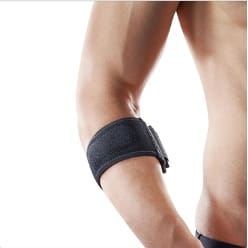
Braces for tennis elbow, also known as counterforce braces or forearm straps, are designed to offload stress from the injured tendon, and support functional recovery. These braces are typically worn just below the elbow and are most effective when combined with activity modification and rehabilitation. Their benefits include:
- Load reduction: Counterforce braces apply targeted pressure to the proximal forearm muscles, reducing the force transmitted to the lateral epicondyle during wrist extension and gripping. Helps limit further aggravation of the tendon and protects it during daily use.
- Pain relief: By reducing the mechanical load on the inflamed or degenerated tendon, braces can help decrease pain during functional tasks such as lifting, grasping, or typing. This makes it easier for individuals to remain active while minimising discomfort.
- Support during movement: Braces stabilise the forearm musculature and dampen vibration or sudden tension generated by repeated or forceful movements. This support reduces the chance of repeated microtrauma during work or sport-related activities.
- Improved healing environment: By minimising tensile stress at the tendon’s origin, braces help maintain a more favourable healing environment. This allows for more effective tissue repair and reduces the risk of further tearing or chronic degeneration.
- Prevention of recurrence: During the rehabilitation phase or when gradually returning to occupational or activity, braces offer protective support. They help manage load during high-risk tasks and are particularly useful for patients with ongoing symptoms or a history of recurrent episodes.
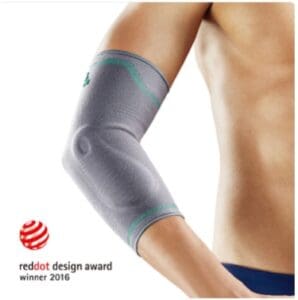
Best supports from OPPO Health for helping to manage tennis elbow include the following, click on the image or title for more details:
Elite Elbow Support Agility Tennis Elbow Support Strap
Targeted Exercises for Recovery and Strength
Rehabilitation exercises are critical to restore strength and prevent recurrence. Common exercises include:
- Wrist extensors stretch: Extend the affected arm in front, palm down, and gently pull the hand downward with the opposite hand to stretch the forearm muscles. Hold for 15–30 seconds.
- Wrist flexor stretch: With the arm extended and palm facing up, use the opposite hand to pull the fingers downward, stretching the forearm flexors.
- Eccentric wrist extension: Hold a light weight (e.g., dumbbell) and slowly lower the wrist from an extended to a neutral position, then use the other hand to return it. Perform 10–15 reps.
- Grip strengthening: Squeeze a soft ball or hand gripper to build grip strength gradually.
- Forearm pronation/supination with resistance: Use a light weight or resistance band to rotate the forearm back and forth while keeping the elbow at 90 degrees.
As with any injury and the use of an orthopaedic support, we recommend a medical professional is consulted to ensure correct diagnosis with a suitable treatment programme and a support which is suitable for the specific condition.
