

Last Updated on 26/01/2026 by admin
Can a Kyphosis Brace Help Straighten Your Spine?
Kyphosis, characterised by an excessive forward curvature of the spine, can lead to discomfort, aesthetic concerns, and in severe cases, respiratory or neurological issues. Early postural kyphosis treatment—including posture correction, targeted exercises, and non-surgical bracing—plays a key role in preventing progression and reducing the need for surgery. This article explores non-surgical treatment options, including the use of braces and targeted exercises, to manage and potentially correct kyphotic deformities.
What Causes Kyphosis and How to Recognise It Early
The mid (thoracic) spine naturally has some kyphosis or mild thoracic spine curvature, which helps maintain balance and posture. A kyphotic spinal deformity means there is excessive forward curve in the spine resulting in a rounded or hunched/ humped back appearance. Symptoms of kyphosis can range from poor posture and back discomfort to severe problems of pressure on the lungs and abdomen. The pain occurs primarily around the kyphosis. A severe curve can also begin to exert pressure on the spinal cord and spinal nerve roots, which may cause weakness in the lower extremities. Eventually there can be pressure on the lungs and abdomen, affecting breathing and appetite. People who suffer from kyphosis may feel ashamed or embarrassed about the effects of this condition on their appearance. Some may even become socially withdrawn or reluctant to take part in activities.
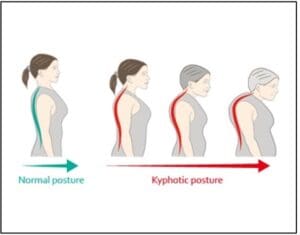
A normal spine maintains a gentle, natural curve that keeps the body upright and balanced. When the upper back develops an excessive forward curve, it results in a kyphotic posture, causing the shoulders and head to lean forward and the back to appear rounded.
What are the Risk Factors for Kyphosis?
- Poor Posture (Postural Kyphosis) – prolonged slouching, leaning back in chairs and carrying heavy bags can lengthen supporting muscles and ligaments, which can increase thoracic spinal curvature.
- Abnormally Shaped Vertebrae (Scheuermann’s Kyphosis) – if the vertebrae don’t develop properly, they can end up being out of position.
- Age – as people get older, the spine naturally tends to round forward, increasing curvature.
Can Early Non-Surgical Treatment Prevent Kyphosis Progression?
Treatment for kyphosis will depend on its severity and underlying cause. In the past, it used to be very serious when it was discovered, so the most treatment of kyphosis was surgery. Today, with the advancement of medical research and technology, the surgical treatment of kyphosis has become a matter of some controversy. According to the NHS, kyphosis rarely requires surgical treatment. It is only needed in some severe cases to correct the curvature of the spine. With the development of medical research and technology, early postural kyphosis treatment—which may include spinal bracing and functional rehabilitation—has become a vital approach to managing curvature and supporting spinal alignment. If physical therapy is started in the early stage of kyphosis, the deterioration of kyphosis and the correction of the kyphosis angle of the patient can be avoided, thereby reducing the chance of surgery.
How a Kyphosis Support Brace Works to Correct Posture & Relieve Pain
Kyphosis support braces can be an effective part of conservative management for postural kyphosis or hyper kyphosis. Their benefits include:
- Pain and muscle spasm reduction: By limiting excessive forward bending and supporting the upper back, kyphosis braces help decrease strain on overstretched spinal muscles. This reduction in mechanical stress can ease pain and reduce reactive muscle spasms commonly seen in kyphotic posture.
- Support and stimulation for weak muscles: Braces provide external support to fatigued or weakened thoracic extensor muscles. Some designs also promote gentle activation of these muscles, encouraging improved posture awareness and supporting the spine during daily activities.
- Spine alignment control: A kyphosis brace helps stabilise the thoracic spine and prevent progression of abnormal forward curvature. By guiding the body into a more upright position, the brace limits harmful postural patterns that may worsen stiffness, fatigue, or discomfort.
- Correction of kyphotic curvature: Many braces apply corrective forces that help reduce excessive rounding of the upper back. Maintaining a more neutral spinal alignment can improve overall posture, reduce stress on the cervical and lumbar spine, and support more efficient movement patterns.
Who Can Benefit from a Kyphosis Brace? How it can Helps All Ages
Kyphosis braces are used across all age groups, and each population may benefit in different ways depending on their posture needs, activity levels, and spinal health.
Kids and Adolescents: In kids, especially during growth spurts, a kyphosis brace is commonly prescribed to prevent worsening of spinal curvature. Conditions such as Scheuermann’s kyphosis or posture-related rounding of the upper back can progress quickly while the spine is still developing. Wearing a brace consistently helps guide the spine into better alignment. Although some children or teens may feel self-conscious at first, bracing is a proven method for controlling curve progression and supporting long-term spine health.
Adults: Adults often experience kyphosis from prolonged poor posture, muscle fatigue, or job-related strain such as long hours at a computer or repetitive bending. A kyphosis brace can reduce upper-back tension, support weakened postural muscles, and encourage healthier alignment during daily activities. Many adults find that using a brace improves posture awareness and reduces discomfort during work and exercise.
Elderly: Kyphosis may be linked to osteoporosis, vertebral compression fractures, or age-related muscle weakness. Bracing can help stabilise the spine, reduce pain, and promote a more upright posture, which may improve balance and reduce fall risk. A brace can also make daily tasks like walking, reaching, or standing, safer and more comfortable, helping maintain mobility and independence.
How to Choose the Right Brace for Kyphosis According to Your Condition
The 2075 Posture Aid / Clavicle Brace uses elastic straps to gently remind the wearer to maintain correct posture. It is best for rounded shoulders or mild postural kyphosis caused by long-term slouching. By supporting the upper back and stimulating mid-back muscles, it helps correct shoulder slump and prevents the curve from worsening.
The 2356 Posture Brace offers flexible spine stays that keep the back upright and properly aligned. Designed for mild kyphosis or early signs of a hunched back, it provides balanced support while maintaining mobility. Regular use helps correct mild spinal curvature, strengthen paraspinal muscles, and prevent further progression.
These braces form part of a comprehensive postural kyphosis treatment plan, helping users improve alignment and comfort without surgery. When combined with targeted exercises and daily posture awareness, they support better spine health and serve as an effective approach in how to prevent kyphosis from getting worse over time.

As with any condition, we recommend a medical professional is consulted to ensure correct diagnosis with a suitable treatment programme and an orthopaedic support which is suitable for the specific condition.
Frequently Asked Questions
Q: Can a kyphosis brace help straighten a hunched back?
Yes, the kyphosis brace is a well-established and highly effective conservative treatment for Scheuermann’s Kyphosis, demonstrating significant corrective potential, particularly when applied before skeletal maturity and maintained with high patient compliance. Multiple studies support this efficacy making bracing a robust method for managing adolescent hyper kyphosis.
Q: Is it safe to wear a kyphosis brace every day?
Wearing a kyphosis brace daily is generally considered safe and is the standard recommendation for effective therapeutic intervention, particularly in adolescents. Research consistently supports high daily wear times, with protocols often suggesting 16–23 hours. Crucially, studies have shown that the use of a brace does not cause a significant reduction in patients’ daily physical activity. Furthermore, while optimal correction often requires longer wear, similar clinical results were achieved by patients wearing braces at least 16 hours daily compared to 23 hours. Patients must always consult their healthcare provider for personalised guidance on optimal wear time and individual considerations.
Q: How can I tell if my back curve is turning into kyphosis?
You can assess for potential kyphosis by observing key warning signs such as :-
1. Increasing difficulty maintaining an upright posture
2. Reduced ability to straighten your back
3. Visible forward curvature of the upper spine.
Q: Can kyphosis cause breathing or digestive problems?
Kyphosis can cause significant breathing and digestive problems because the exaggerated curve of the spine reduces the space available for the internal organs. For respiratory impacts, severe kyphosis significantly reduces vital capacity (the maximum amount of air you can exhale after a maximal inhalation) and overall breathing function. Respiratory impairment has been reported in over half of patients with congenital kyphosis, with the severity increasing as the kyphosis angle becomes more pronounced.
Regarding digestive function, kyphosis alters the volume of the abdominal cavity and shifts the position of internal organs, which can lead to measurable changes in both food intake and the frequency of bowel movements.
Q: What daily habits support the effectiveness of a kyphosis brace?
To maximise the effectiveness of a kyphosis brace, your daily habits should focus on consistency of wear and psychological support. The most critical habit is maintaining the recommended wearing time, which most studies suggest should be 16 to 23 hours per day though actual patient compliance often averages around 16 hours daily. Key supporting habits include ensuring the brace has a proper fit to minimise discomfort, and continuing normal physical activities as the brace should not significantly restrict daily movement. Because adolescents often struggle with body image and social interactions while wearing the brace, psychological preparation and strong emotional support from family and providers are also essential habits that directly influence consistent, prolonged use.
Effective Exercises and Posture Correctors for Kyphosis
Exercise and physical therapy are important for adults with kyphosis. Research has found that consistent exercises to address kyphosis naturally, including spine strengthening and posture training can bring results as early as 6 months into the routine, improving kyphosis symptoms such as spinal curvature. Resistive Exercise band can be used to do some home exercises to strengthen the muscles.
Cervical extension 
- Grasp the ends of band and place around the back of head.
- Keep neck in a neutral position with chin slightly tucked.
- Extend elbows to stretch band and slowly return, while keeping neck stable.
Overhead pull down 
- Begin with arms over head and holding the band shoulder width apart (keep elbows straight).
- Pull the band down to chest while keeping elbows straight.
Core muscle strengthening 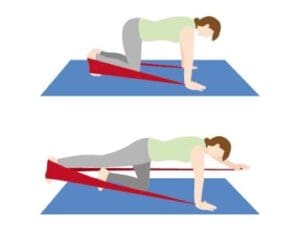
- Place band over arch of foot. Slightly contract abdominal muscles while keeping trunk stable.
- The opposite side of the hand and feet slowly extend forward and rearward.
- Hold 10 seconds and then change to other side.
